
Mpox (Monkeypox) in SLO County

Mpox (Monkeypox)
Mpox (previously called monkeypox) is a disease caused by a relative of the smallpox virus. It spreads primarily through close, intimate, often skin-to-skin contact, including sexual contact, with people who have Mpox symptoms such as rash and sores.
Subscribe to Receive Updates >
Information for Health Care Providers >
About Mpox
Mpox is a disease caused by a relative of the smallpox virus. Mpox usually causes a rash or sores—which can look like pimples, blisters, or an ingrown hair—and flu-like symptoms. It spreads primarily through close, intimate, often skin-to-skin contact, including sexual contact, with people who have mpox symptoms such as rash and sores.
There are two types of mpox, clade I and clade II. Since May 2022, there has been an uptick in clade II cases in parts of the world where mpox does not usually occur, including here in California. While new cases have slowed since then, the virus is still circulating in California. Two cases of mpox have been identified in San Luis Obispo County since 2022.
Outside of the U.S. there have been outbreaks of mpox in recent years in Western Europe (2025), Central and Eastern Africa (2023-2025), as well as other regions (countries in other parts of Africa, Asia, Europe, North America, South America, and Australia).
In October 2025, three clade I mpox cases were identified in Californians who did not have a history of recent international travel. The three individuals were hospitalized for treatment and have since recovered.
Public health monitoring is ongoing, and the risk to the public remains low. Widespread vaccine availability since 2022 has also helped reduce transmission, significantly slowing outbreaks and lowering the risk of infection.
_____________
Vaccine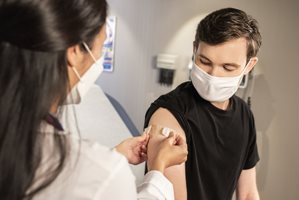
Some pharmacies such as CVS and Walgreens may offer the mpox vaccine, but availability can change. Call ahead to confirm.
While our Public Health clinics do not currently offer the mpox vaccine, our staff are available by phone to help you find an appointment. To reach our team, call (805) 781-5500.
Patients do not need to attest to specific risk factors: just call and say you would like to get the mpox vaccine. The vaccine not only protects you from infection and severe illness, but it can provide protection post-exposure. If you are exposed to mpox, it is strongly recommended that you get vaccinated within 4-14 days to prevent severe infection.
If you are living with HIV, it’s especially important to get vaccine protection against mpox. While mpox infection can be painful and inconvenient for anyone, it can be extremely dangerous and even life-threatening for people living with HIV.
Not sure if you should get vaccinated against mpox? The California Department of Public Health (CDPH) recommends 2 doses of the Mpox vaccine for those who may be at higher risk of infection. See CDPH recommendations for who should get vaccinated. You can also talk with your healthcare provider or contact us to discuss your questions.
Need help finding a vaccine appointment?
Call us: (805) 781-5500
_____________
Protect Yourself
In addition to getting the vaccine, you can take steps to protect yourself from mpox:
- Talk with close contacts, including sexual partners, about any recent illness and be aware of new or unexplained sores or rashes on your body or your partner’s body.
- Postpone close, intimate, skin-to-skin contact with people who have mpox symptoms like rashes or sores until sores have fully healed and a new layer of skin has formed.
- Avoid contact with unwashed items or fabrics (bedding, towels, clothing) used by someone who has mpox symptoms like rashes or sores.
- Wash your hands thoroughly and often.
- If you are caring for someone who has mpox and is experiencing symptoms, use personal protective equipment like a mask, gown, eye protection, and gloves.
- If you have an unusual rash, with or without flu-like symptoms, talk with your healthcare provider for an evaluation.
Learn more about how to protect yourself
_____________
When to Seek Care
Anyone who has an unusual rash (with or without flu-like symptoms) and is concerned about mpox should contact their healthcare provider for an evaluation and follow-up care. This is especially important if they may have had close personal contact with someone who had a rash, or attended a large event with lots of close contact.
Your healthcare provider can conduct a risk assessment for mpox and coordinate testing and treatment if needed. Medication is available for severe cases and for individuals at risk of severe disease. Medication is also available to help with pain management if needed.
If you do not have a healthcare provider or don’t know where to start, call the Public Health Department at (805) 781-5500.
_____________
State Guidance
The California Department of Public Health has released detailed guidance documents addressing mpox. See State guidance.
_____________
Resources
Visit the CDC webpage for Safer Sex, Social Gatherings, and Mpox for information on protecting yourself and others from illness.

_____________
Information for Health Care Providers
Clinical Recognition and Considerations
- U.S. Preparedness and Response to Increasing Clade I Mpox Cases in the Democratic Republic of the Congo — United States, 2024
- CDC: Monkeypox Information For Healthcare Professionals
- Includes Case Definition, Clinical Guidance, Clinician FAQs, Infection Control and more
- Surveillance, case investigation and contact tracing for Monkeypox: Interim guidance (who.int)
- CDPH: Mpox Information for Health Care Providers
- Includes Case Definition, Diagnosis and Reporting; Infection Control; Prevention and Management in Healthcare Settings; Treatment and more
Specimen Collection and Testing
- SLO County Public Health Laboratory: Specimen Collection & Transportation Instructions
In addition to these instructions, please keep in mind:- Do not clean lesions prior to collection.
- Avoid using numbing gels or other creams prior to collection.
- Unroofing the lesion is no longer appropriate or needed.
- Swab lesions vigorously during sampling.
- Send swabs in a sterile container (dry swab, no VTM).
- Testing is also available from commercial laboratories, including Aegis, ARUP Laboratories, Labcorp, and Quest Diagnostics.
- Specimens obtained from patients less than 18 years of age must be sent to the Public Health Lab rather than a private laboratory.
Mpox Treatment Information
Many mpox patients experience a mild, limited infection and recover without medical intervention. However, each case depends on factors including immune status, vaccination status, comorbidities, and the health status of the patient. All mpox patients should be provided supportive care, including pain and itch management, and treatment for nausea and vomiting.
Treatment with Tecovirimat (TPOXX)
Tecovirimat (TPOXX) is approved by the FDA for treating smallpox in adults and children. While its use for mpox is not currently approved by the FDA, it has been effective in treating mpox.
Patients at higher risk of severe mpox disease, or who progress to severe disease, should be considered to receive treatment. TPOXX is only available through certain channels and the inventory is tracked.
For mpox patients who meet eligibility criteria, providers should immediately seek out IV tecovirimat. IV treatment for mpox is only available through the CDC to treat patients at increased risk of severe disease. Visit the CDPH Guidance for Healthcare Providers for more information on mpox treatment.
For IV TPOXX in an in-patient setting, contact the CDC EOC at (770) 488-7100.
The Public Health Department has a small supply of oral Tecovirimat on hand. Providers who wish to treat a patient with oral TPOXX should contact Heidi Holmes-Nagy by email or phone (805) 781-5535. There will be no cost to patient or provider for this medication.
If there are any questions or challenges related to TPOXX access after following the above steps, please contact [email protected].
To report suspected cases:
Call the San Luis Obispo County Public Health Department as soon as possible. Call 805-781-5500 (M-F, 8 a.m.–5 p.m.) or 805-781-4553 (weekends and after hours).