Legionella Urinary Antigen Testing In April, the County of San Luis Obispo (SLO) Public Health Laboratory introduced a new test—the Legionella Urinary Antigen Card (BinaxNOW Legionella)—to rapidly detect Legionella pneumophila serogroup 1 antigen in urine from patients with pneumonia. The decision to add this test was prompted by a Legionella outbreak in the County of SLO in late 2021 and the occurrence of additional cases since that time. The sensitivity and specificity of this antigen test are ≥95% in the target population, which is patients who have been hospitalized with pneumonia. A positive detection of Legionella will prompt the collection of a respiratory specimen to recover the bacteria and establish links to an environmental source through whole-genome sequencing. Additional information about this and other tests can be found on the lab’s website at: www.slocounty.gov/PH-Lab.  MALDI-TOF Mass Spectrometry The SLO Public Health Laboratory is validating the performance of a MALDI-TOF (Matrix Assisted Laser Desorption Ionization Time-of-Flight) mass spectrometry instrument for identifying pathogenic bacteria and fungi. With the phase out of probe detection methods, we hope to introduce this technology to rapidly identify pathogens, such as mycobacteria species and Coccidioides immitis (cause of Valley Fever), from human specimens. As a brief overview, the MALDI-TOF instrument uses laser technology to create a protein profile of the microorganism; this profile is then matched against a master library to determine the microorganism’s identity to the genus and species level. The instrument will support the laboratory’s goal to accelerate both identification of pathogens and detection of antimicrobial resistance. 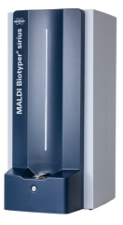
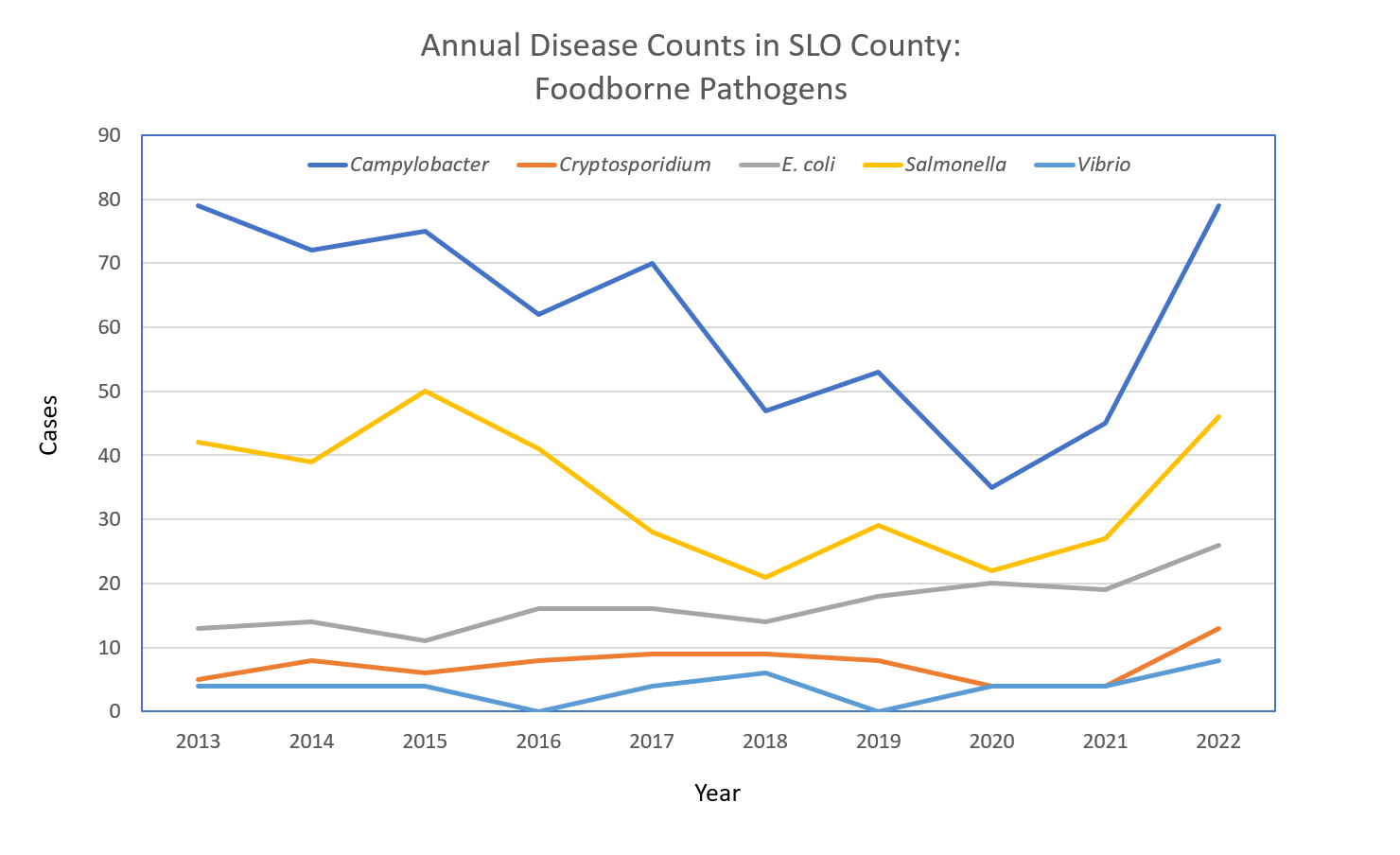
Instrument Upgrade The laboratory uses the Hologic Panther instrument to perform high volume testing for SARS-CoV-2, Chlamydia, N. gonorrhoeae, Trichomonas, and Mycoplasma genitalium. This instrument is scheduled for an upgrade in mid-May 2023. The upgrade will further increase testing capacity and provide access to additional tests for new diseases. We anticipate only minimal disruptions to testing services. Food-borne Illness Update In 2022, case counts for a number of food-borne pathogens reached the highest levels seen in SLO County over the past 10 years. This included cases of Campylobacter, Cryptosporidium, Escherichia coli, Salmonella, and Vibrio (see figure). Increases in bacterial food-borne infection are common in summer months when warmer temperatures promote the growth of bacteria. Title 17 section 2505 requires that several gastrointestinal pathogens be submitted to a public health laboratory as soon as available to aid in outbreak investigations: - Listeria monocytogenes isolates
- Shiga toxin-positive fecal broths and Shiga toxin-producing Escherichia coli (STEC) isolates
- Salmonella isolates
- Shigella isolates
With your assistance, we can minimize the impact and extent of food-borne illness in the County of SLO.
Questions? Please contact the Laboratory Director by email or phone. Glen M. Miller, PhD, HCLD(ABB) Director, Public Health Laboratory San Luis Obispo County Public Health Laboratory 2191 Johnson Avenue San Luis Obispo, CA 93401 (805) 781-5512 [email protected] |  County of San Luis Obispo