 County of San Luis Obispo
County of San Luis Obispo Public Health Laboratory
Laboratory Messenger September 2023
|
Carba-R Assay The County of San Luis Obispo (SLO) Public Health Laboratory has added a new test, the Xpert Carba-R assay, to monitor resistance against a class of antibiotics known as carbapenems. Carbapenems have broad antibacterial activity, and resistance to these antibiotics means that fewer treatment options are available to patients. Knowing whether a patient has an infection that is resistant to carbapenems can aid treatment choice and improve infection control. The test and collection supplies are offered at no cost through a grant for strengthening antimicrobial resistance (AR) surveillance in California through screening for carbapenemase-producing organisms. Tests results are typically available one day after specimen receipt depending on the specimen type. Two types of specimens are acceptable:
If negative by the Carba-R assay, isolates that qualify for further testing will be referred to the state laboratory. Additional information about this and other tests can be found on the lab’s website at: www.slocounty.ca.gov/Laboratory. Carbapenem-resistant bacteria. Image source: CDC
MALDI-TOF Mass Spectrometry Update The SLO Public Health Laboratory has now validated a MALDI-TOF (Matrix Assisted Laser Desorption Ionization Time-of-Flight) mass spectrometry instrument to identify both bacteria and yeast pathogens. We are likewise completing studies on mycobacteria species (such as Mycobacterium tuberculosis) and hope to have this expanded identification capability by the end of September. More than 100 different organisms have been tested as part of these combined validation studies. Use of MALDI-TOF mass spectrometry is a step forward for the laboratory to rapidly identify pathogens to the genus and species level once they grow in culture. Future studies will evaluate the speciation of molds, including Coccidioides immitis.
Mycoplasma genitalium Testing Mycoplasma genitalium (M. gen) is an often misdiagnosed sexually-transmitted infection, with a prevalence that is higher than gonorrhea and similar to chlamydia. The Centers for Disease Control and Prevention (CDC) recommends screening for Mycoplasma genitalium (M. gen) in cases of recurrent cervicitis in women, and for recurrent non-gonococcal urethritis in men. Testing may also be considered in females with pelvic inflammatory disease. Guidelines for M. gen treatment have now been established and involve a two-stage therapy approach that considers macrolide resistance testing. The SLO Public Health Laboratory offers the Aptima® Mycoplasma genitalium assay, a nucleic acid amplified test (NAAT) for efficient and reliable detection of M. gen. A single specimen (e.g., vaginal swab, urine) can be tested for chlamydia/gonorrhea, Trichomonas, and M. gen.
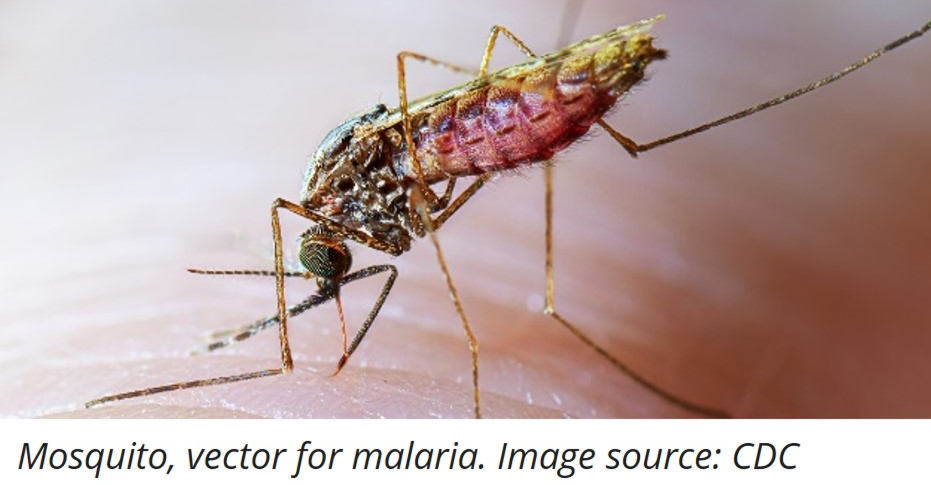
Malaria Cases in the U.S. The CDC issued a Health Alert Network (HAN) update to share information about locally-acquired malaria cases identified in the United States. On August 18, 2023, a case of locally-acquired malaria, caused by Plasmodium falciparum, was reported in the National Capital Region of Maryland. This follows eight reports of Plasmodium vivax malaria in Florida and Texas earlier in the summer. There have been no additional cases of local transmission in Florida or Texas since mid-July 2023, but monitoring is ongoing. The risk to the U.S. public for locally-acquired mosquito-transmitted malaria remains very low, but the CDC encourages clinicians to consider a malaria diagnosis in patients with an unexplained cause of fever, regardless of their travel history.
Questions? Please contact the Laboratory Director by email or phone. Glen M. Miller, PhD, HCLD(ABB) Director, Public Health Laboratory San Luis Obispo County Public Health Laboratory 2191 Johnson Avenue, San Luis Obispo, CA 93401 (805) 781-5512 |