 County of San Luis Obispo
County of San Luis Obispo Public Health Laboratory
Laboratory Messenger August 2026
|
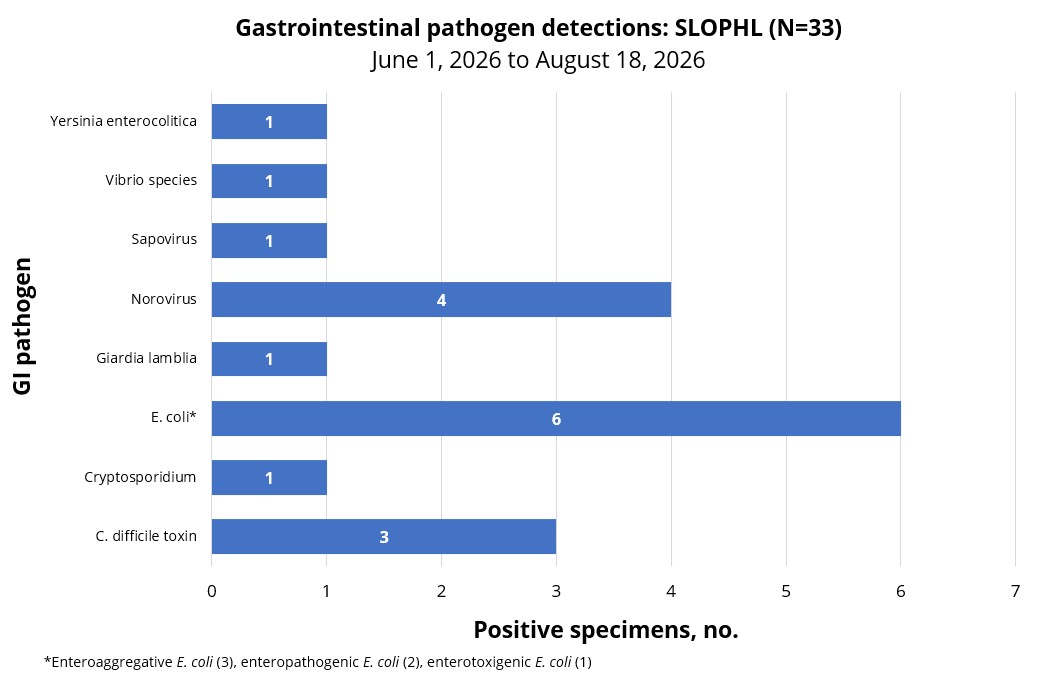
Cyclospora Testing in SLO Amidst a national outbreak of Cyclospora, the County of San Luis Obispo (SLO) Public Health Laboratory has received a moderate number of requests for gastrointestinal illness panel testing. The laboratory has not detected any cases of Cyclospora over the past 2.5 months (see figure), consistent with reports that the outbreak in the East Coast and Midwest has not spread to California. Although no definitive source has been identified to date, contaminated produce remains the most likely source; person-to-person transmission is unlikely because the life cycle of Cyclospora requires time in the soil or water under warm conditions to become infectious.
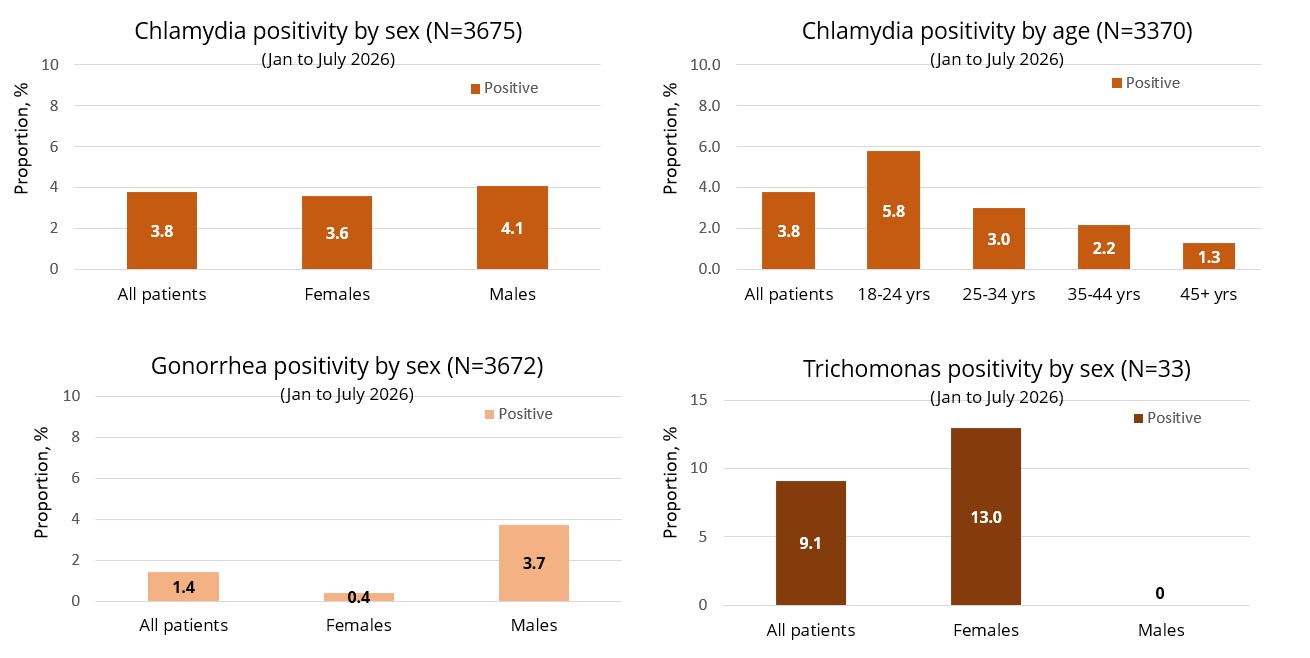
Ocean Water Quality Monitoring Every week from April to October, the SLO Public Health Laboratory monitors beach water quality across 19 county sites for levels of total coliforms, E. coli, and enterococci. These bacteria are indicators of different types of contamination, with E. coli being most closely linked to human sources. To perform this testing, the laboratory maintains certification through the California State Water Resources Control Board. Information on weekly results and beach closures are updated every Tuesday on the County’s Beach Water Quality Monitoring website. STI Statistics The most common testing performed at the SLO Public Health Laboratory is for sexually transmitted infections (STIs), specifically for chlamydia and gonorrhea. Our laboratory partners with reproductive health clinics, including those operated by Community Action Partnership and Community Health Centers of the Central Coast, to provide STI testing services to local residents as part of their medical care. Data from January through July of 2026 showed:
Advancing Molecular Diagnostics In July, several members from the SLO Public Health Laboratory attended training on the Panther Fusion Open Access platform at Hologic’s headquarters is San Diego, CA. This system allows laboratories to customize PCR tests and integrate automation into workflows to speed result availability and increase throughput. The laboratory plans to transfer several molecular tests, including those for measles and chickenpox, to this new platform, with the goal of improving overall readiness and response. Updates in Brief
|