Pathways Home: SLO County Behavioral Health Continuum Infrastructure Program (BHCIP)
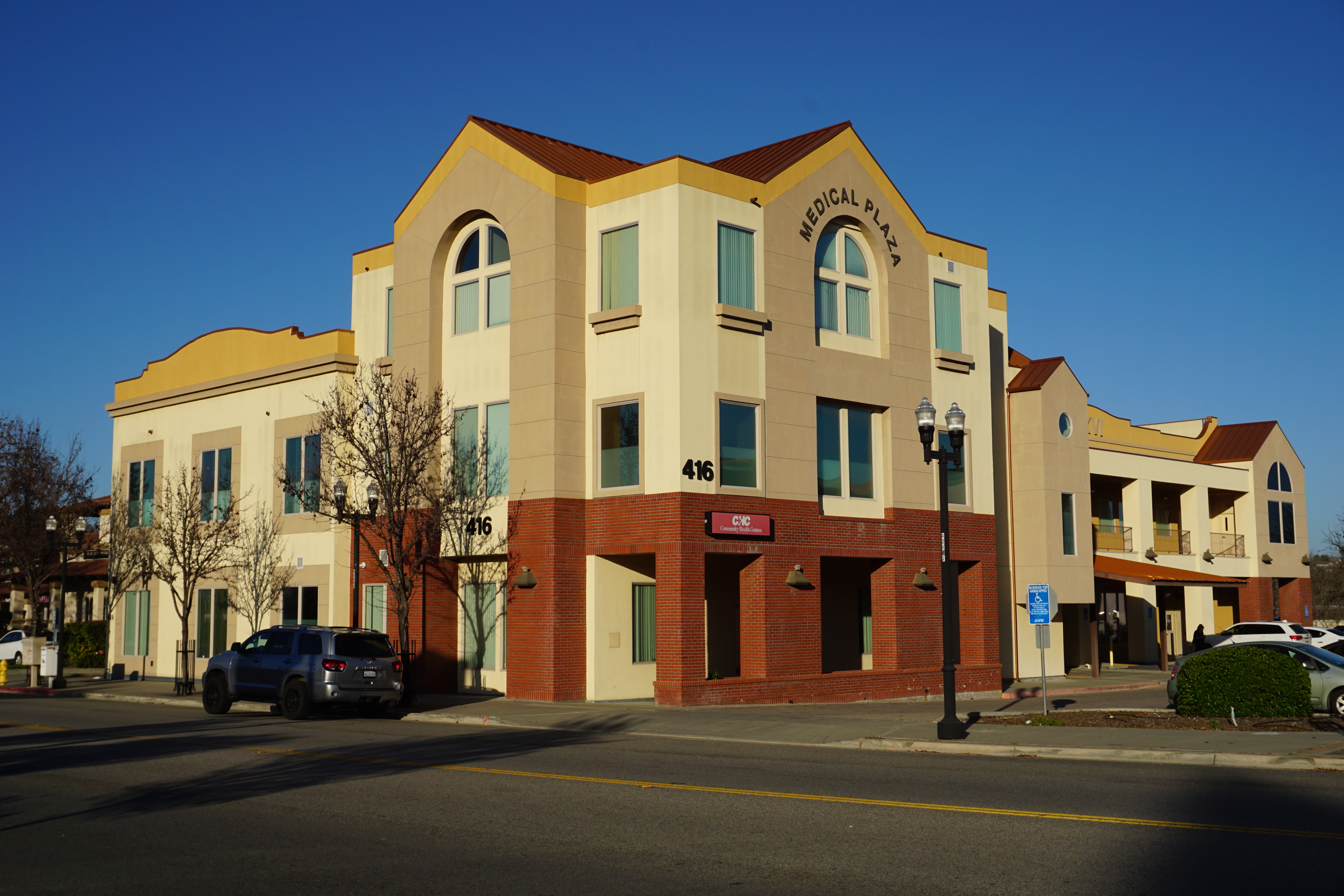
The "Pathways Home" project is in response to goals outlined in Behavioral Health’s 2024-2029 Strategic Plan (and 2023 Behavioral Health gaps analysis) of expanding access to residential facilities offering inpatient treatment and the development of a behavioral health crisis treatment program for youth.
This new project addresses gaps in the local SLO County Behavioral Health system of care by:
- Adding the first ever children and youth mental health inpatient and crisis residential beds in the San Luis Obispo and Santa Barbara regions
- Increasing the number of mental health inpatient adult beds in the community
- Adding the first ever adult crisis residential beds in SLO County
The 26-bed facility will significantly reduce the strain on individuals and families in need by providing local care and coordination right here in SLO County, rather than transferring patients out-of-county for the care they need.
Phases & Milestones
Current Phase
County of SLO Public Works is issuing a Request for Proposals to the three top pre-approved design-build firms. The County will evaluate the proposals received and recommend an award of the project's top ranked firm. It is anticipated that the County will have a contract with the top ranked firm by December 2026, and the design will begin immediately after contract award.
Estimated Date of Completion: 12/31/2026
Spring 2026
Submit County of SLO Public Works request for qualification/proposals for design and construction.
Date Completed: 5/31/2026
January 2026
On Tuesday, January 27, 2026 the County of San Luis Obispo Board of Supervisors met to accept the grant, execute the State grant agreement, and approve the acquisition of the Paso Robles property.
Read the January 27 Board Agenda here.
Date Completed: 1/27/2026
December 2025:
The County of San Luis Obispo Health Agency received the BHCIP grant agreement from the State of California.
May 2025:
About the Project
- The program is in response to goals outlined in Behavioral Health’s 2024-2029 Strategic Plan (and 2023 Behavioral Health gaps analysis) of expanding access to residential facilities offering inpatient treatment and the development of a behavioral health crisis treatment program for youth in their home County of San Luis Obispo.
- The State’s “Assessing the Continuum of Care for Behavioral Health Services in California” (2022) report also showed that the County of San Luis Obispo is one of the few coastal counties without crisis residential treatment programs. Additionally, the report notes that we do not have enough acute mental health inpatient beds. Many adults receive treatment out of county, and the one existing 16-bed PHF is often at or near capacity.
- The expansion of inpatient beds could also address the increased need to provide services to individuals placed on an involuntary hold based on the new expanded SB-43 criteria for voluntary detention and conservatorship which now include severe substance use disorders.
- The new crisis residential and inpatient beds could also provide additional capacity for new CARE Court participants when crisis care is needed.
Additionally, the site has added benefits for the health of the community due to it being co-located with the Department of Social Services, SLO Public Health, and existing SLO Behavioral Health outpatient offices. Community members can receive multiple services at the same Health Campus such as outpatient drug and alcohol and mental health services and benefit assistance (e.g. CalWORKs, General Assistance, Medi-Cal) through Social Services.
The project is going to the Board of Supervisors in January 2026 to request acceptance of the grant and of the grant agreement. From there, the project then moves into the design development phase, with anticipated renovations completing in Fiscal Year 2028-2029.
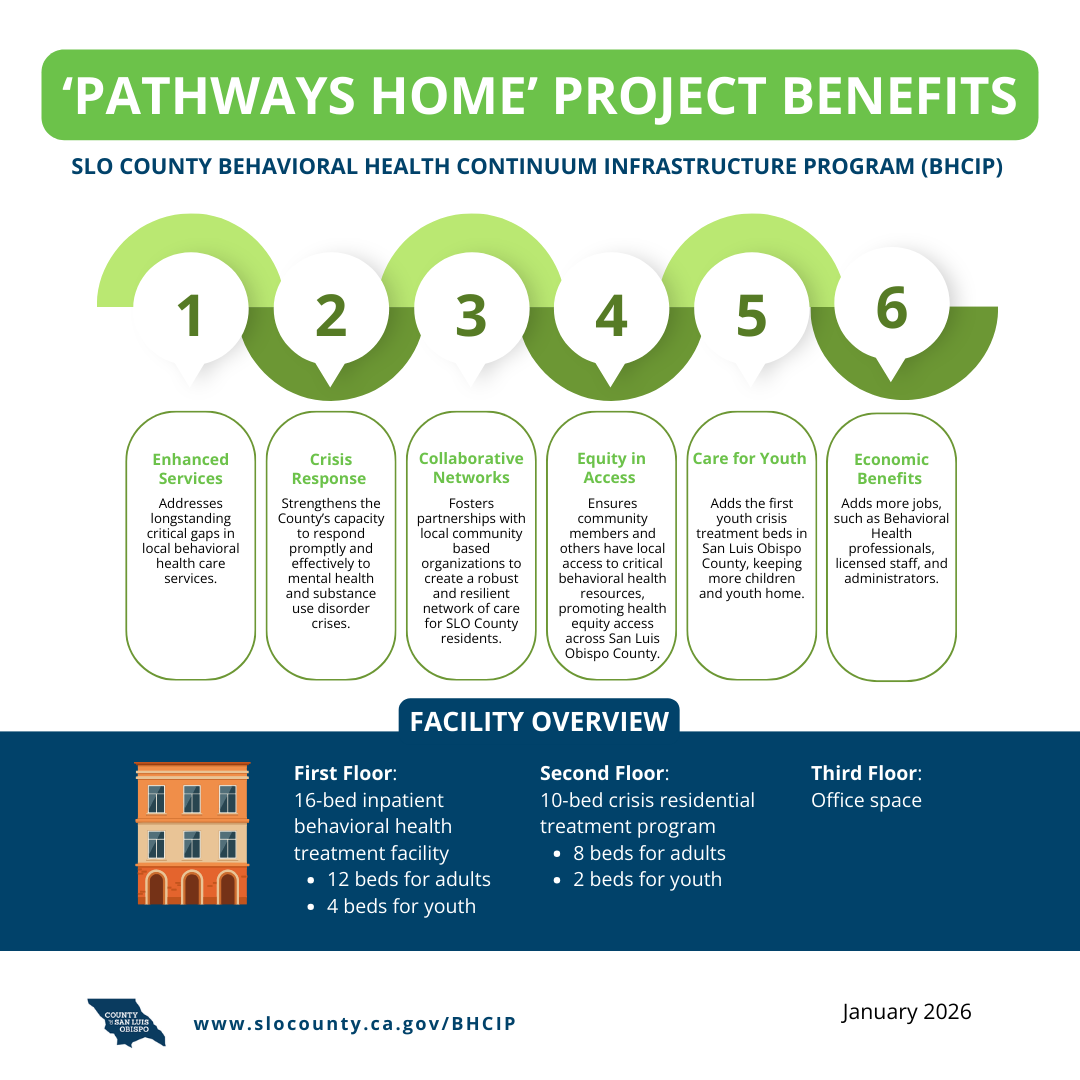
- 16-new adult and youth inpatient mental health beds (12 for adult, 4 for youth).
- 10 new adult and youth crisis residential beds (8 for adult, 2 for youth).
* A“bed” refers to a physical bed in a facility that can accommodate one person per 24-hour period.
More information on designated beds for youth versus adults can be found here.
Funding Information
The project uses $21.6 million in funding from the state’s Behavioral Health Continuum Infrastructure Program (BHCIP) grant to acquire and renovate an existing 23,000 square foot facility to become inpatient and crisis residential beds for youth, and adults.
Services Provided
- Inpatient Psychiatric Hospital Services (youth and adults)- Locked facility with 24/7 admissions.
- Provides 72 hours of psychiatric evaluation and treatment to individuals who may be involuntarily detained because of a mental disorder, a danger to self, danger to others, or may be gravely mentally disabled, including expansions under new SB43 law for a severe substance use disorder. (5150 adult hold, 5585 youth hold)
- Services will include psychiatry, clinical psychology, psychiatric nursing, social work, rehabilitation, medication administration, and food services. Coordination and referrals to step down facilities (like crisis residential services), programs, and services will also be provided for patients in preparation for discharge.
- Adult Crisis Residential Services- Unlocked, voluntary facility open 24/7
- Provides more time for individuals to receive crisis stabilization services and care coordination.
- Typical stays are 7-30 days, and individuals can stay up to 90 days if clinically appropriate.
- Focus is on reduction of the crisis, stabilization, referrals, assessments, connections to support systems, connections to vocational programs and income and treatment referrals, transportation, and assistance with self-administration of prescription and non-prescription medications; recreation/activity space. Coordination and referrals to step down facilities, programs, and services will also be provided for patients.
- Youth Crisis Residential Services- Unlocked facility with admissions daily
- Provides more time for individuals to receive crisis stabilization services and care coordination.
- Typical stays are 10 days or less, and youth can stay longer if clinically indicated.
- Services will include structured mental health treatment services such as counseling, crisis intervention, development of community supports system, development of self-advocacy skills, socialization and interpersonal skills, medication support services, targeted case management, psychiatric nursing services, and recreational services. Services will be closely coordinated with County Behavioral Health youth behavioral health programs and the Department of Social Services.
Crisis Residential Treatment:
Crisis Residential Treatment beds will be focused on Medi-Cal insured individuals. Referrals will typically come from County Office of Education, Probation, the County’s Psychiatric Health Facility (PHF), jail, mobile crisis teams, Behavioral Health outpatient clinics, hospitals, Community Action Teams, and law enforcement entities.The Youth Crisis Residential Treatment beds will prioritize referrals from the SLO County and Santa Barbara County Department of Social Services for foster youth in the child welfare system.
Psychiatric Health Facility (PHF):
The Adult Psychiatric Health Facility will receive referrals for clients from County Behavioral Health programs, law enforcement, mobile crisis, and hospitals for individuals who are on a 5150-hold. The Youth Psychiatric Health Facility will primarily receive referrals from the County’s mobile crisis provider, which has a youth specialty team.The mobile crisis team receives referrals from schools, community providers, Behavioral Health, hospitals, Social Services, and law enforcement. Law enforcement may also bring youth on 5585-involuntary-holds to the PHF. Additionally, youth consenting to a voluntary admission may be served in the PHF.
- Adding the first ever children and youth inpatient and crisis residential beds in the San Luis Obispo and Santa Barbara regions,
- Increasing the number of inpatient adult beds (Psychiatric Health Facility PHF) in the community and,
- Adding the first ever adult crisis residential beds in SLO County.
The "Pathways Home" Project will reduce out of county placement and the strain on local youth and their families when receiving psychiatric care. These new youth beds would also reduce hospitalizations and visits to local Emergency Departments.
The Crisis Residential Treatment Program and inpatient beds will leverage other housing and homelessness programs to best serve clients. For example, unhoused clients exiting the Psychiatric Health Facility and Crisis Residential Facility will be considered for open Behavioral Health Bridge Housing beds as they become available.