 County of San Luis Obispo
County of San Luis Obispo Public Health Laboratory
Laboratory Messenger April 2026
|
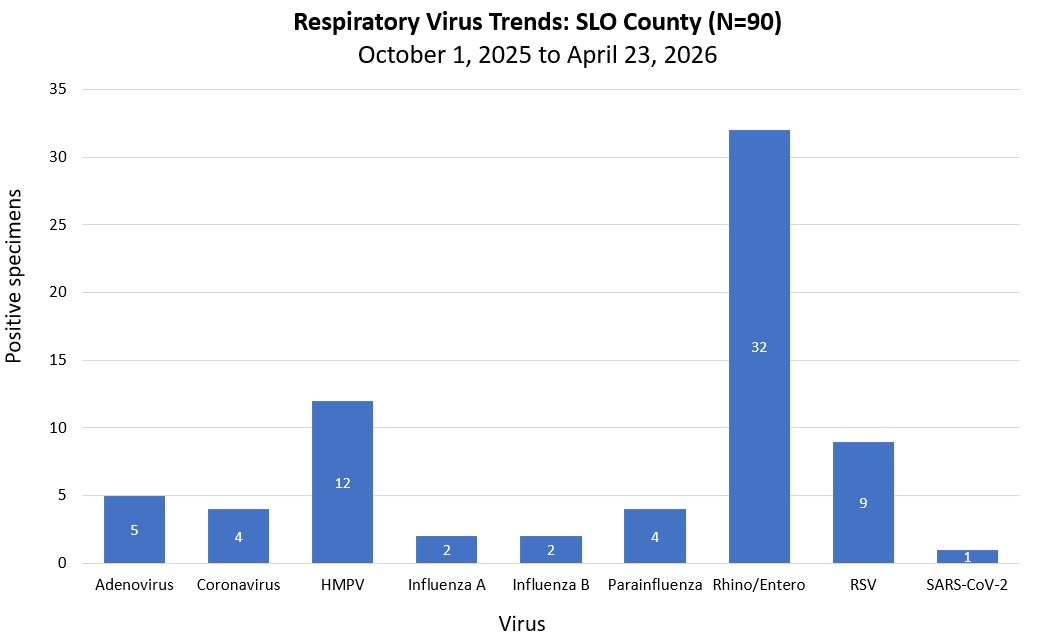
Respiratory Infection Roundup The County of San Luis Obispo (SLO) Public Health Laboratory has performed weekly surveillance activities from October 2025 to April 2026 to monitor influenza circulation. Influenza typing over this time range showed a higher proportion of influenza A, seasonal H3 relative to previous seasons due to the circulation of a new strain, subclade K.
The 2025-26 respiratory virus season also showed several trends:
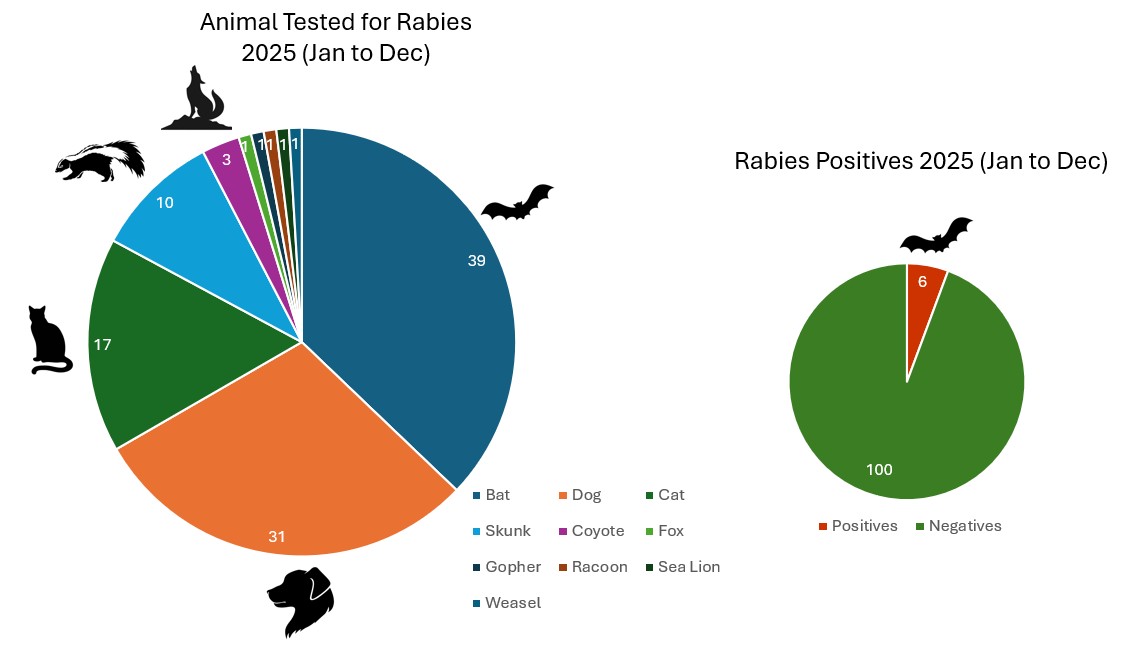
New Test Introduction: HSV The laboratory’s current instrumentation for detecting Herpes Simplex Viruses (HSV) and Varicella Zoster Virus (i.e., chickenpox) is phasing out in 2026. By early May, the SLO Public Health Laboratory will be introducing a new test for HSV-1 and HSV-2 on the Hologic Panther platform. The acceptable specimen type is an anogenital lesion swab collected in Aptima multitest swab collection devices. More information on specimen collection, storage, and fees will be posted soon on the laboratory website. Rabies Surveillance In 2025, the SLO Public Health Laboratory, in conjunction with Animal Services, tested 106 suspect animals for rabies, a potentially fatal viral disease of the central nervous system. The animals tested included bats, dogs, cats, skunks, and even a sea lion. Bats were the only animal species to test positive for rabies, at a proportion of 15%. Beware when touching or handling these winged insectivores!
Brucella Rule-out Testing In 2025, Brucella species were officially removed as select agents from the Federal Select Agent and Toxins list. This decision was based on the low mortality rate associated with brucellosis, rare human-to-human transmission, and the availability of effective antibiotics. However, Brucella species still fall within the Laboratory Response Network (LRN) oversight of potential bioterrorism agents and still represent a substantial health risk to laboratory personnel. Consequently, sentinel laboratories should continue to:
Quick Updates
Questions? Please contact the Laboratory Director by email or phone. |