Flooding is one of the most common natural disasters and can cause significant property damage and loss of life. Properties in low-lying areas and floodplains are especially vulnerable. Understanding your flood risk, staying informed, and knowing what to do during an emergency can help protect you and your family. For flood safety information and preparedness resources, visit ReadySLO’s Storm Preparedness webpage.
What You Can Do to PrepareBefore a Storm or Flood- Create a family emergency plan and discuss how you will communicate during a disaster.
- Prepare a “Grab and Go” bag with essential items, including ID, insurance cards, cash, and emergency contacts.
- Charge your phones and keep your vehicle fueled.
- Keep sandbags, plywood, plastic sheeting, lumber, and other materials ready for waterproofing.
- Sign up for emergency alerts at AlertSLO.org.
During a Storm or Flood- Follow instructions from public officials on local TV, radio, Wireless Emergency Alerts, and Reverse 911.
- Pay attention to Evacuation Warnings and Evacuation Orders—and know the difference.
- Don’t drive through flooded roads, creek crossings, or closures. Even a few inches of moving water can be dangerous.
- Stay away from power lines—electrocution is a common cause of death during flooding.
- Use common sense and try to remain calm.
What is the Plan?- The County’s automated flood warning system provides real-time information on rainfall and weather conditions. View current conditions at wr.slocountywater.org.
- In the event of a potential levee failure or flood, an Evacuation Warning or Evacuation Order will be issued based on pre-designated evacuation zones around the levee, including: FIV-024 (North), FIV-025 (Lagoon), and SLC-315 (South).
- Be prepared by looking up your evacuation zone using your address.
Evacuation and Safe Point Information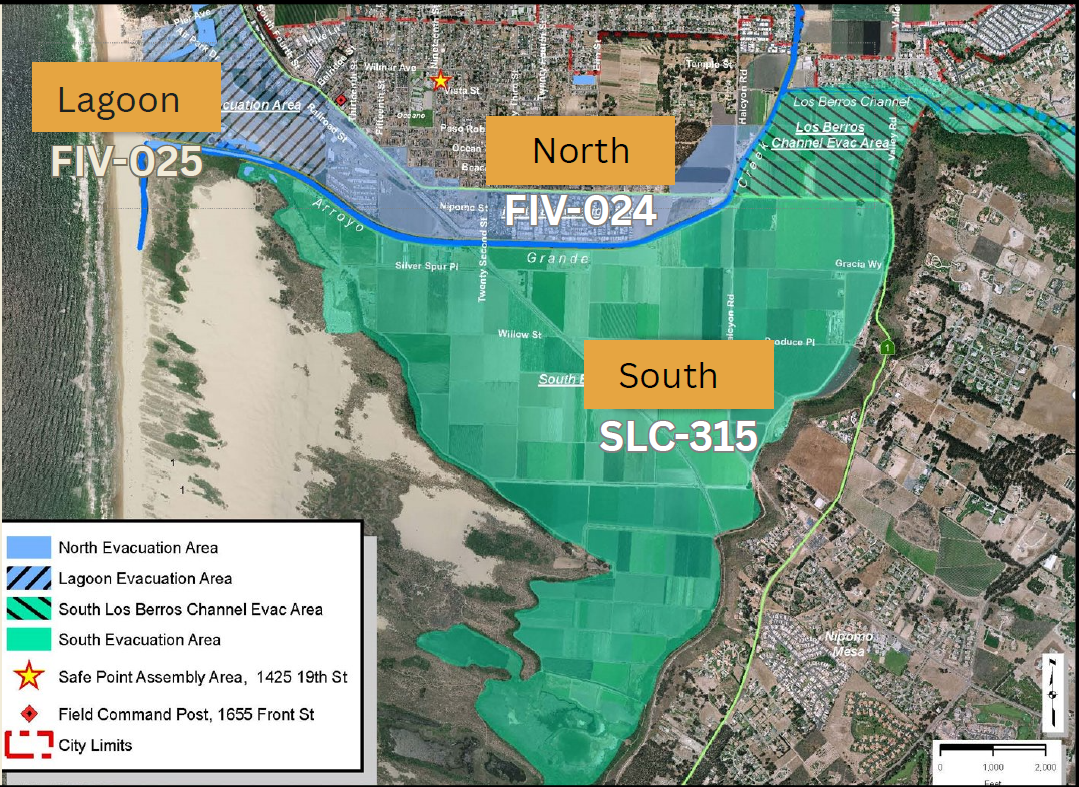 The Oceano Community Center (1425 19th Street) is the designated Safe Point Assembly Area and Temporary Evacuation Point for the levee area. It is identified on the evacuation map and will be activated during emergencies.
Evacuation Warning vs. Evacuation OrderEvacuation Warning — Prepare to LeaveIssued when there is a potential threat to life or property. - Gather your family, pets, and emergency supplies.
- If you will need extra time to evacuate, consider leaving as soon as a warning is issued.
Evacuation Order — Leave NowIssued when there is an immediate threat to life or property. - Evacuate immediately with your family, pets, and emergency supply kit.
- Bring essential documents and records.
Additional Resources |