E-Bike Safety
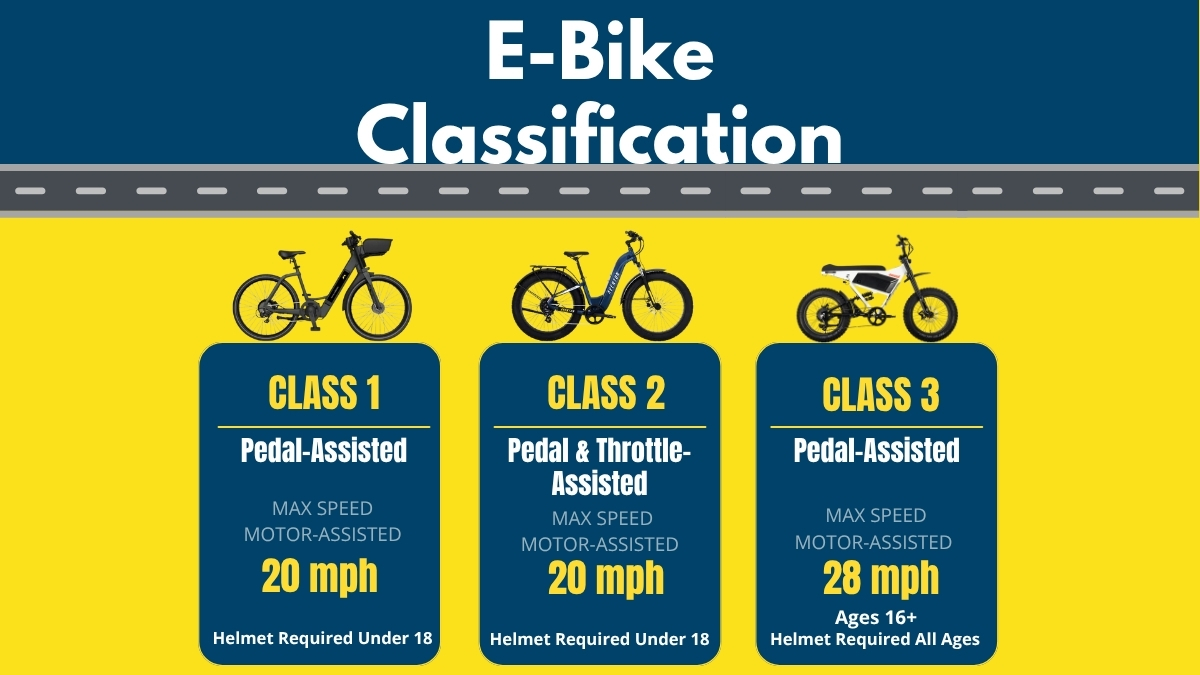
E-bikes can provide a convenient and enjoyable way to get around. Explore resources that provide riders and families information about choosing the right bike, understanding California’s e-bike classes, and riding safely.
| E-BIKE PARENT AND CAREGIVER GUIDE |
|---|
You are your child’s best safety advocate. As more students are riding e-bikes to school, e-bike injuries among youth are increasing and are often more severe. Safe habits and the right equipment lower the risks of a crash and serious injuries. What’s Different About E-Bikes E-bikes give young riders more independence, and they also come with more responsibility.
The American Academy of Pediatrics recommends only a Class 1 e-bike for riders ages 12 to 15, and the U.S. Consumer Product Safety Commission advises that children ages 9-12 should not operate any product that travels faster than 10 mph. Is It Street Legal? A legal e-bike must have working pedals, a motor of 750 watts or less, and fit into Class 1, 2, or 3. E-motos are not e-bikes and cannot be ridden on public roadways. It is illegal to modify an e-bike's speed capability so that it no longer meets California's definition of an e-bike. Research Before You Buy
When you can, buy from a local bike shop. Staff can confirm the bike is a legal e-bike, show your child how to ride it, and help with repairs. Riding with a Passenger Passengers need their own seat attached to the bike. Extra weight means a longer stopping distance. Passengers under 18 must wear a helmet, and on Class 3 e-bikes, all passengers regardless of age must wear one. Start the Conversation Short everyday questions help build safe habits:
|
E-Bike Education
We provide e-bike safety presentations for middle school students, parents and caregivers, and community groups. Presentations can be adapted to the audience and may be offered with local law enforcement partners when available. For more information or to request an E-bike Safety presentation contact us or call: 805 781-4944.
FAQs
Trusted Resources
- California Highway Patrol Electric Bicycle Safety Training
- CHP: Vulnerable Road Users
- Go Safely California E-Bike, E-Scooter, and E-Motorcycle Safety
- Go Safely California E-Bike Resource Guide for Parents and Caregivers
- Go Safely California E-Bike and E-Scooter Toolkits and Tip Cards
- American Academy of Pediatrics: Are E-Bikes Safe for Children?
- American Academy of Pediatrics: Is Your Child Ready for an E-Bike? Checklist (PDF)
- California Vehicle Code: Legal Definition of an E-Bike